
Introduction to Environmental Forensics
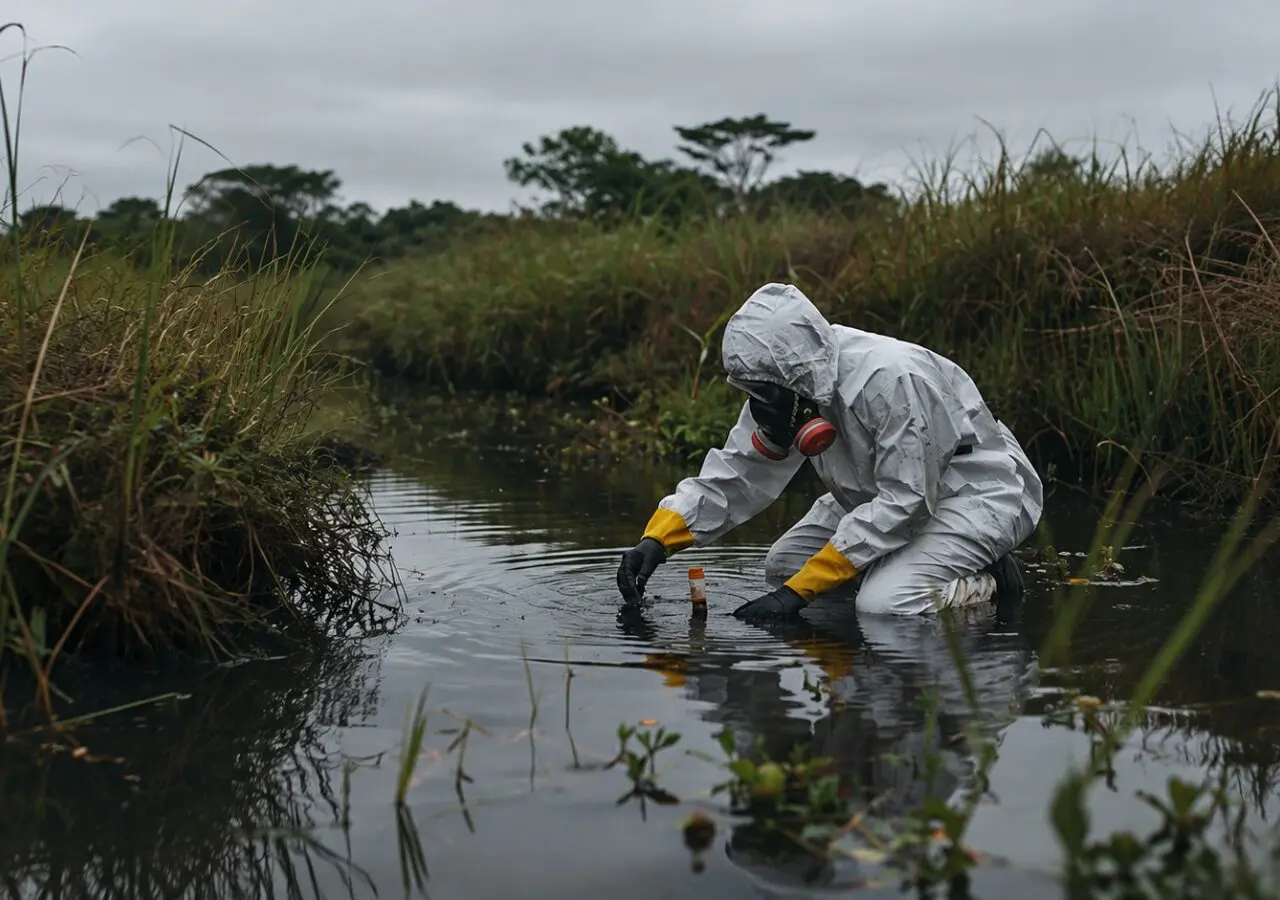
Environmental forensics focuses centrally on determining contaminant origins. In its infancy, it relied heavily on measurements of priority pollutants using standard methods and declining gradients from the point of release to the area of impact. While these techniques continue to work well, over the years practitioners cross-fertilized univariate methods from the 1970’s with a broad range of advancements in the fields of chemistry, geology, statistics, hydrology, history and many others. The synoptic use of conventional and advanced forensic techniques improved linkages between priority pollutant concentration gradients and commingled patterns of unregulated source-specific chemicals to confirm the origin of harmful substances. Watching this field grow and evolve over the last 30 years resembled a major motion picture with a dizzying array of plot lines and no small measure of daring-do by creative scientists trying to answer novel questions.
Unique Site Features
Contaminated properties often present challenges due to their unique natural and operational histories, chemicals usage, product manufacturing, periods of release, biogeochemical degradation, and remediation solutions. The site-specific complexities defy cookie-cutter methodologies used to accurately determine contaminant sources, migration pathways, and areas of impact.
Environmental forensics often assesses contaminant origins wherever the potential impacts occur. Source signatures are very useful when they can be tracked across multiple matrices (e.g. product, soil, sediment, water, air and tissue). Chemical stability and partitioning are important components of the analysis when the contamination passes from one matrix to the other (e.g., soil to air). Consequently, advancements in contaminant measurement for one matrix (e.g., soil methods) benefits from comparable advancement in related matrices (e.g., air methods). Like many modern industries, ongoing research and development investment is important.
Contaminants De Jour
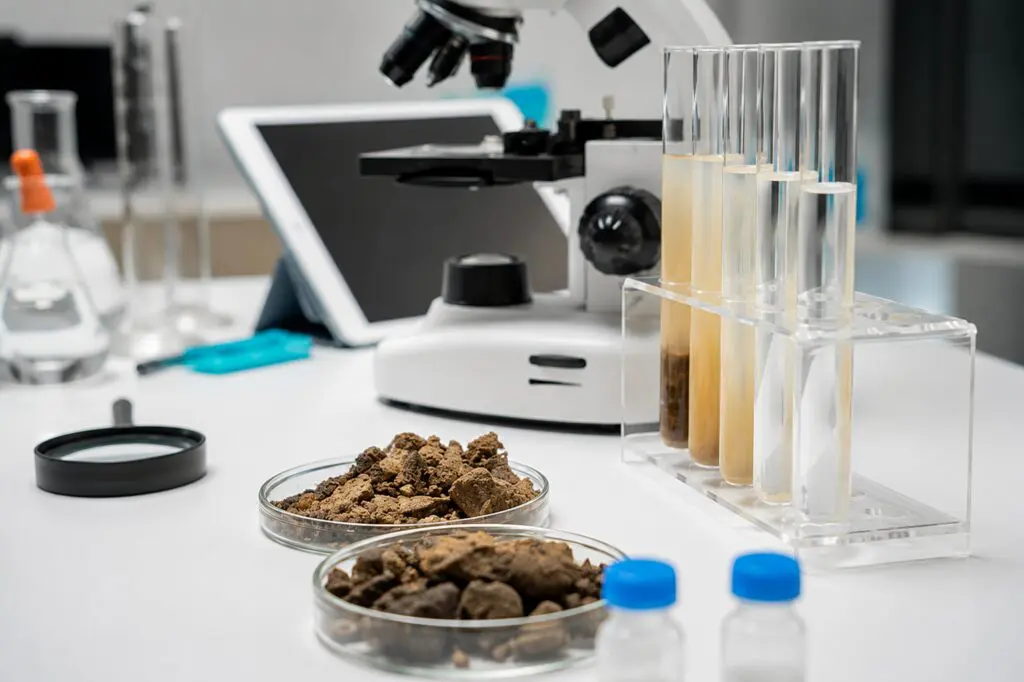
ACS maintains the chemical abstract service registry that contains more than 200 million industrial chemicals with thousands added to the registry every year1. Wang (2020) estimated that scientists possess technologies for measuring approximately 350,000 substances2. EPA primarily concerns itself with 126 priority pollutant chemicals (many dating back to the 1970’s) with regulations that permit the inclusion of others under special circumstances, but the reality is that environmental investigations routinely monitor less than 0.001% of the man-made chemicals potentially released to the environment.
These figures simply demonstrate that universe of man-made chemicals is far greater than those we can measure or regulate. In this context, it should come as no surprise that source-specific signatures beyond the realm of regulated compounds exist if you know how to measure them.
The phrase “forever chemicals” seems to appear every 5 to 10 years. The label “forever chemicals” is not particularly meaningful because nothing remains unchanged forever. However, it does accomplish one job very well. It attracts clever civil engineers and scientists to figure out how to isolate or treat recalcitrant substances and enhance natural degradation processes capable of eliminating them. For forensic investigators, degradation patterns can be useful for distinguishing plumes from one another, especially when the assessment techniques measure the parent contaminant and the degradation byproducts. A helpful insight is that a site’s unique features can be used as an asset if the forensic toolbox is sufficiently large and adaptable.
Phased Approach
Environmental forensic investigations typically involve several phases, multi-disciplinary techniques, and data-driven solutions based on multiple lines of evidence. Proceeding one step at a time allows investigators to right-size the approach by using the information gathered during conventional assessments to determine if additional work is needed. When contaminant origins are uncertain, Phase1 of the investigation sets the stage for the efficient planning and execution of subsequent work. It involves the gathering and analysis of site histories of candidate sources and begs the question, “What are we looking for?” It often involves a re-assessment of the historical compliance data to critically evaluate changes in contaminant mixtures, plume boundaries, and alleged migration pathways. Detailed laboratory reports can be evaluated (data validation and usability assessments) to determine the level of uncertainty at critical locations. Tentatively identified compound reports and raw instrument data (e.g., gas chromatograms) help assess compositional complexity.
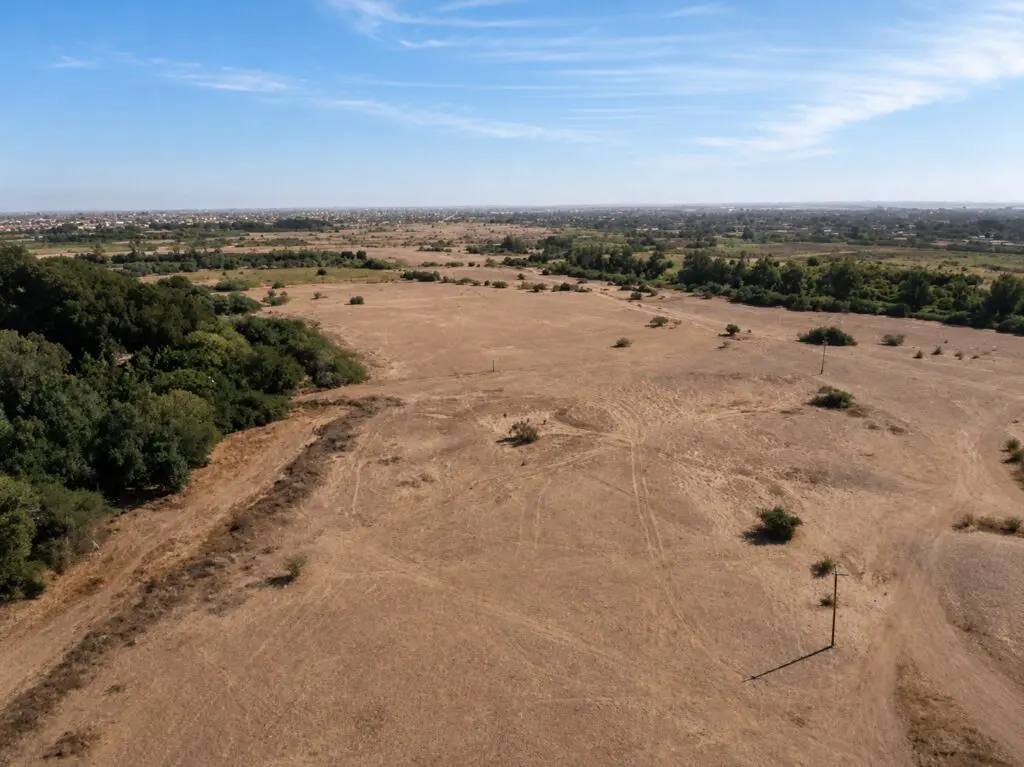
Phase 2 typically includes the procurement of new information (e.g., aerial photos, site histories of adjacent industries, and background datasets) or the collection of new data (e.g., areas with low sample density). It may subject samples to established forensic techniques (e.g., geochemical biomarkers, alkylated PAHs, stable isotopes, or radionuclides) not needed for regulatory compliance or risk assessment, but important for matching fugitive plumes to candidate sources. Phase 2 helps resolve forensic data gaps identified during Phase 1. Phases 1 and 2 usually complete or substantially address the original forensic objectives.
Phase 3 is employed when one or two critical questions remain. It can employ novel techniques developed in different scientific disciplines. It can involve collaborations with universities and instrument manufacturers to develop new lines of confirmatory evidence. Many important publications germinated when new lines of evidence generated publishable discoveries that paved the way for others to follow. In this way, one practitioner’s project portfolio can assist others and propel the field to new insights and advancement.
The Future
The proliferation textbooks and journal articles concerning environmental forensics testify to the benefit of phased forensic investigations. A multidisciplinary approach allows practitioners to stay informed about the adjacent disciplines. Discoveries in one field and the development of new instrumentational capabilities find rapid adoption in forensics investigations. In turn, the measurement of trace compounds can help site investigators formulate better conceptual site models, risk assessors better identify injuries, and site remediators reduce contamination. Advanced forensic techniques are not limited to source identification and offer benefits to adjacent disciplines within the environmental industry. It’s a two-way street.
ECF’s future blog posts will feature strategies, technique, and discoveries encountered during our 30 years (and counting) in the field. We invite you to check in on this page every couple of weeks to see if there is anything that catches your attention. We hope you enjoy the journey. Feel free to contact us with your thoughts, feedback, and questions on the website. Yours truly, Steve.
- American Chemical Society (2023) CAS REGISTRY—The CAS Substance Collection. https://www.cas.org/cas-data/cas-registry
- Wang Z, Walker GW, Muir DCG, Nagatani-Yoshida K (2020) Toward a global understanding of chemical pollution: a first comprehensive analysis of national and regional chemical inventories. Environ Sci Technol 54:2575–2584
Need Source Identification Expertise?
From source identification to litigation support, our team is here to help you move forward with confidence. Contact our specialists today.
Schedule a Consultation