
Hydrocarbon Fingerprinting
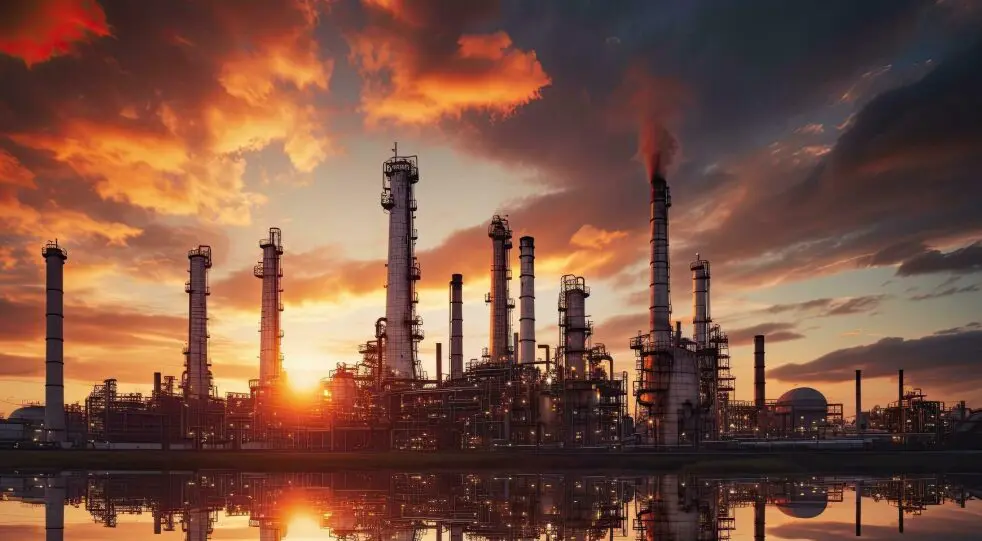
Petroleum, coal tar, and refined hydrocarbon products are not typically single, uniform substances. Each one carries a distinct chemical composition shaped by its starting materials, process of formation, and environmental degradation. Chemical fingerprinting is the branch of environmental forensics that measures and assesses the composition of hydrocarbon residues in contaminated media (e.g., oil, soil, sediment, air, tissue, and water) to answer questions about where the contamination came from, how it spread, or when it was released. For legal professionals working through a hydrocarbon spill dispute, understanding the broad reach and rapid evolution of environmental forensic science helps clarify what kind of evidence is attainable and how it is best produced.
Forensic Challenges Faced by Standard Testing Methods
Laboratories use standard testing methods to detect priority-pollutant compounds representative of commonly encountered contaminants to protect the largest number of human and ecological receptors. Most environmental investigations start with standard methods designed to detect total petroleum hydrocarbons, industrial solvents, heavy metals, or a short list of other priority-pollutant compounds. These analyte measurements help identify and minimize exposure to contamination that exceeds regulatory (health-based) thresholds. EPA recognizes approximately 126 priority-pollutant compounds , of which only a handful are typically detected in an impacted site at a concentration of environment al significance. Consequently, the majority of hydrocarbons in petroleum are measured as bulk parameters (total petroleum hydrocarbons) or ignored altogether.
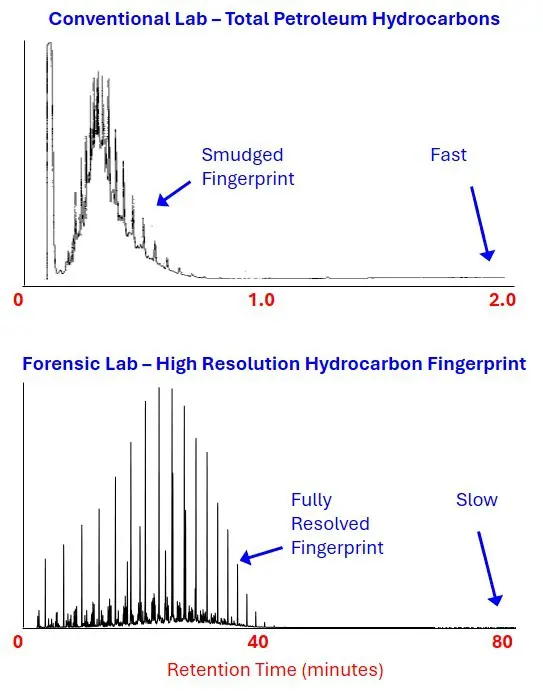
In many cases, numerous forensically significant hydrocarbons co-occur with priority pollutants, but are not monitored because they are not particularly harmful and the extra effort might increase the overall investigation cost during routine monitoring. However, forensic investigators benefit greatly from the analysis of non-standard compounds when they help chemically differentiate petroleum sources from one another. For example, a total petroleum hydrocarbon result might identify the presence and amount of oil, but this result often fails to answer subsequent questions about whether the source was gasoline, diesel, heating oil, or coal tar. In addition, conventional laboratory data often provide little to no information about the degree of degradation or the approximate age of the release.
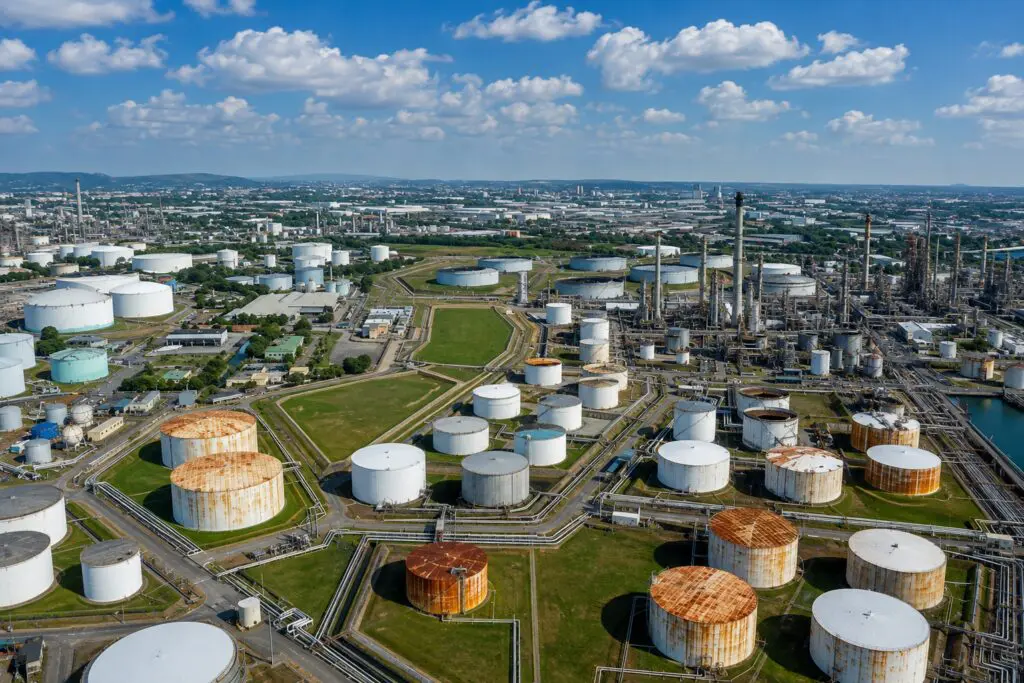
Petroleum and tar refineries create numerous products by carefully redistributing hydrocarbons by distillation and selectively removing compounds that degrade product performance. These formulations changed over time in response to technological and regulatory priorities. The net effect of these changes is unique product signatures that help forensic investigators identify which products were used and possibly the historical period of production. Answering forensic questions can require the measurement of additional non-standard compounds using specialized forensic testing methods.
Signature Resolution
Nearly every chemical fingerprinting method relies on some form of chromatography or spectrometry. These laboratory techniques separate complex mixtures into individual chemical components so each one can be measured with minimal interference. When applied to a hydrocarbon sample, a chromatograph equipped with a spectrometer detector produces a pattern, sometimes visualized as a chromatogram that describes the specific mix of compounds present. Two samples drawn from the same original source tend to produce recognizably similar patterns (forensic matches), while samples from different sources, or the same source at different stages of weathering, tend to diverge (no matches). Forensic methods specialize in maximizing compound resolution of diagnostic compounds regardless of concentration.
Different classes of hydrocarbon compounds call for different analytical approaches. Highly volatile compounds, the kind that evaporate readily and show up in soil vapor or air samples, require methods tailored to capturing and measuring them before they are lost. Semivolatile compounds, which persist longer in soil, sediment, and groundwater, are typically characterized through a combination of techniques: a broad chromatographic fingerprint that captures the dominant hydrocarbons in a sample, paired with more targeted measurements of specific compound families such as polycyclic aromatic hydrocarbons, saturated hydrocarbons, and geochemical biomarkers.
Recalcitrant Chemical Fingerprints
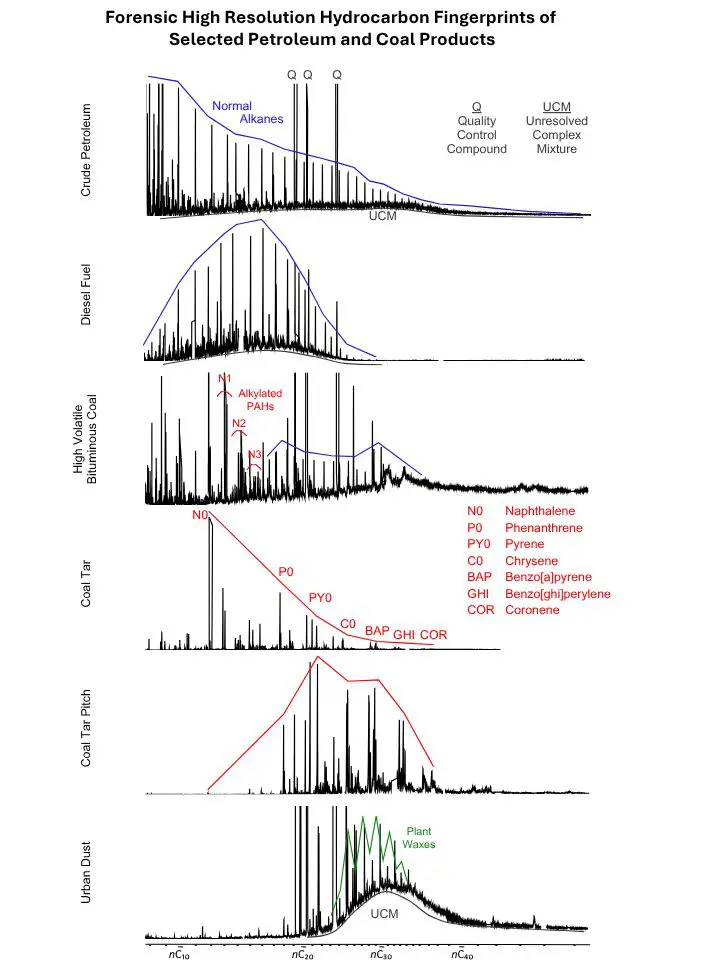
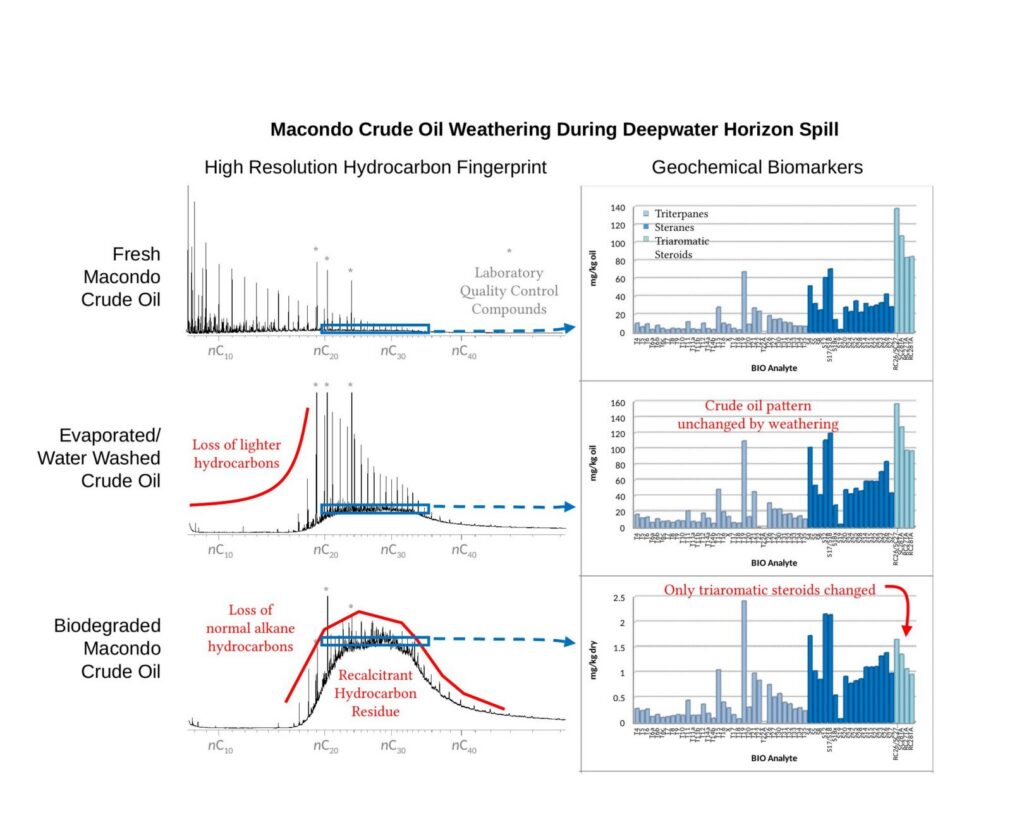
A “chemical fingerprint” is the term of art used to describe the relative abundance of detected compounds. Some of these compounds degrade in the environment, but some remain unaltered in the environment for long periods of time (i.e., recalcitrant compounds). Among the more useful tools in this field are geochemical biomarkers, a set of compounds that formed over geologic time as ancient organic matter transformed into coal or petroleum. Because these compounds trace back to the original depositional environment and formation conditions of a fossil fuel, they carry information about its geologic origin that persists long after a spill or release. Biomarkers also tend to resist the environmental degradation processes that break down other hydrocarbons over time, which makes them particularly valuable when a sample has weathered substantially. A hydrocarbon mixture that has lost most of its lighter, more easily degraded compounds may still retain a biomarker pattern detailed enough to point back toward a specific type of crude oil or coal.
Weathering, Mixing, and Timing
Environmental contamination rarely remains completely unchanged. Once released, man-made (anthropogenic) substances weather. Lighter compounds evaporate or dissolve, bioactive compounds are microbially digested by bacteria, photoreactive compounds decompose in sunlight, etc. Decades of research demonstrate that certain classes of compounds degrade faster than others, and the overall “chemical fingerprint” changes in predictable ways over time. These predictable degradation changes can be used to estimate the degree of degradation and, under known circumstances, can be used to estimate the time required to reduce certain contaminants below harmful concentrations. Studies that use comparable reference samples are particularly helpful for contaminant dating studies, but this effort should be performed carefully, because the rate of environmental degradation can vary considerably within a single site.
Contamination at a given location is also often a mixture of more than one source, whether from multiple historical releases, a blend of different fuel types, or overlapping contributions from a contaminant of interest and naturally occurring or background hydrocarbons. Distinguishing a genuine release from background material and separating the relative contributions of multiple candidate sources within a mixed sample generally benefits from the use of more than one independent chemical signature side-by-side rather than relying on any single measurement.
Multiple Lines of Evidence
Individual chemical tests or diagnostic ratios are used most powerfully when they are used synoptically. The strength of chemical fingerprinting comes from combining several complementary lines of evidence: broad contaminant patterns, non-target compound-class measurements, biomarker distributions, and weathering indicators. When multiple independent signatures point toward the same source and the same general timeframe, the resulting conclusion rests on a considerably firmer foundation than any one piece of data could provide alone.
Many journal articles and textbooks have been written on environmental forensic testing, analysis, and interpretation. The reader is encouraged to read widely within the many disciplines used by environmental professionals: geology, statistics, hydrology, civil engineering, toxicology, and many others. A great place to start is:
Introduction to Environmental Forensics (2015) edited by Brian L. Murphy and Robert D. Morrison (DOI: 10.1016/B978-0-12-369522-2.X5000-3). Don’t forget to read Chapter 8 entitled, “Hydrocarbon Fingerprinting Methods” by Gregory S. Douglas, Stephen Emsbo-Mattingly, Scott A. Stout, Allen D. Uhler, and Kevin J. McCarthy.
Why Environmental Forensics Matters
For legal professionals evaluating hydrocarbon releases, mastery of the underlying chemistry is not necessary, but the systematic technical approach used by forensic investigators is worth keeping in mind. Standard regulatory data, the kind most readily available for each site investigation, generally cannot answer questions of source or timing on their own, even when they clearly establish that contamination exists. Determining where a contaminant came from and when it was likely released often includes the systematic and integrated application of standard and specialized forensic methods capable of developing multiple lines of evidence used synoptically, rather than relying on any single result in isolation. Recognizing the distinction between standard compliance monitoring and source identification techniques early in a case can help set realistic expectations about the best application of supplemental sampling, specialized testing, and advanced interpretation strategies needed for a successful forensic outcome.
Need Source Identification Expertise?
From source identification to litigation support, our team is here to help you move forward with confidence. Contact our specialists today.
Schedule a Consultation