
Dr. Jerry Neff Tribute: Advancements in Pyrogenic PAH forensics
I walked into Dr. Jerry Neff’s office at Battelle Memorial Institute (Duxbury MA) in 2000 hoping to discuss polycyclic aromatic hydrocarbons (PAHs). I walked out two hours later infinitely more aware of contaminant toxicity and risk assessment from one of the most generous thought-leaders in the business. Under my arm I held a signed copy of his PAH opus(1). Thereafter, we collaborated periodically on large sediment investigations on which Battelle justifiably based its reputation. News of Jerry’s passing on August 4, 2026 brought my day to a stop with reflections of his many contributions to oil spill assessments and the ecological risk assessment community in general. His prolific publications inspired broad-based research, multidisciplinary analysis, and incremental scientific advancement.

Encouraged by Dr. Neff, I leveraged my growing interest in a special class of PAHs formed at high temperature (pyrogenic PAHs) developed with Dr. David Mauro at META Environmental into research projects within Battelle’s internal research and development (IR&D) program. This work applied cutting-edge techniques used during oil spill investigations (Exxon Valez and others) to releases of carbonization (manufactured gas plants, byproduct coke ovens, and wood preservers – creosote treated objects) and combustion (soot from automobiles, wildfires, and others) residues in urban environments. At the time, a deficit existed between advancements in the forensic characterization of petroleum constituents (petrogenic PAHs) and the less specific chemical fingerprints of carbonization and combustion residues (pyrogenic PAHs). Few knew how to isolate tar feedstocks for forensic purposes. With indispensable assistance from my colleagues Dr. Allen Uhler, Dr. Scott Stout, Dr. Gregory Douglas, Dr. Gregory Durell, and Dr. Paul Boehm, the forensic techniques we incrementally developed helped distinguish a wide range of PAH sources and gradually assisted an ever-broadening array of emerging source identification puzzles. These accomplishments owe much gratitude to Dr. Neff’s long legacy.
PAH Sources in Shoreline Sediments
Nearshore and urban properties typically experienced complex histories. A stretch of waterfront that today hosts a marina or a residential dock may have formerly supported a manufactured gas plant, a coke works, or fuel terminal. The tar and petroleum byproducts of older operations can linger in the soil and sediment long after the removal of historical buildings and structures. Questions rapidly arise concerning contaminant origin when staining or sheening emerges from shoreline sediments decades later. Are the sheens composed of petroleum, tar, sewage, or natural organics? Candidate sources may also include historical operations at neighboring properties as well as regional background. Our team at ECF spent years working through these exact questions, drawing on a body of chemical fingerprinting work applied across a range of near-shore sediment investigations involving tar and petroleum products.
Legacy Industries
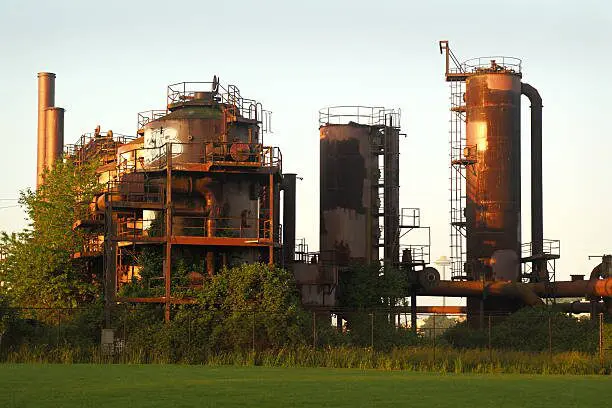
Manufactured gas plants (MGPs) operated in American cities between the early 1800’s through 1960’s, converting coal or petroleum feedstocks into gas for heating and lighting. High temperature (pyrogenic) byproducts, such as tar condensate, were either discharged into a local waterbody or transported to a refinery to produce creosote, roofing pitch, roadway pavement, and a wide range of other products. Plant designers prioritized direct access to clean fresh water to produce steam and cooling fluids. Consequently, many of these plants sat directly on shorelines, where barges and trains delivered coal or oil and exported saleable byproducts. Subsequent redevelopment often erased any visible trace of the original plant, leaving behind marinas, parks, or mixed-use waterfronts. Proximal sediments near some plants contained PAHs from the old operation mixed with PAHs from man-made runoff. Could the commingled PAHs be distinguished and how would the source boundaries be defined?
Complicating Factors
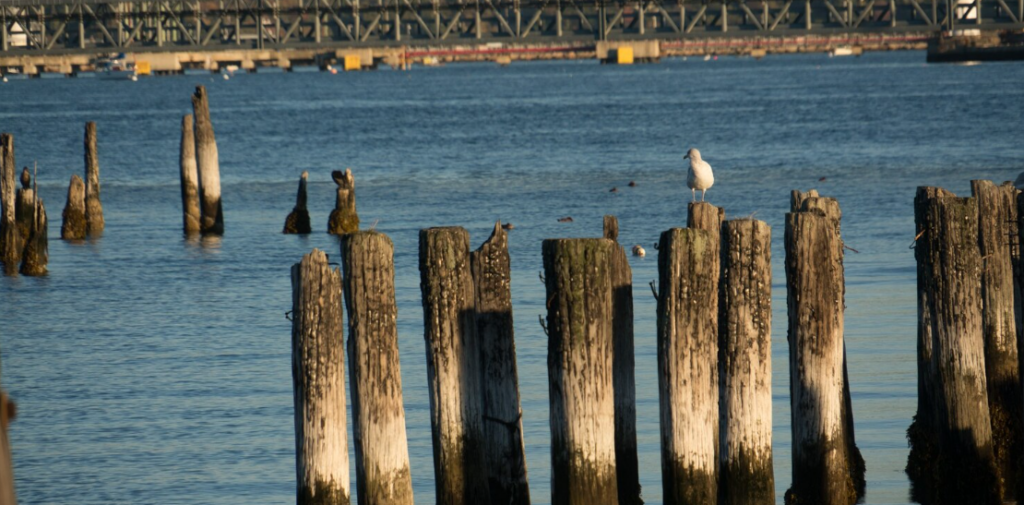
Shoreline sediment investigations near these sites are complicated by the fact that MGPs, coke plants, and tar refineries were often redeveloped into petroleum refineries, fuel terminals, boat repair facilities, and creosote-treated pilings where different PAH sources commingle. Add decades of natural weathering, and a sediment sample can end up carrying a blended, degraded mixture of several different hydrocarbon products rather than a clean signal from any one of them.
Why Appearances Fall Short
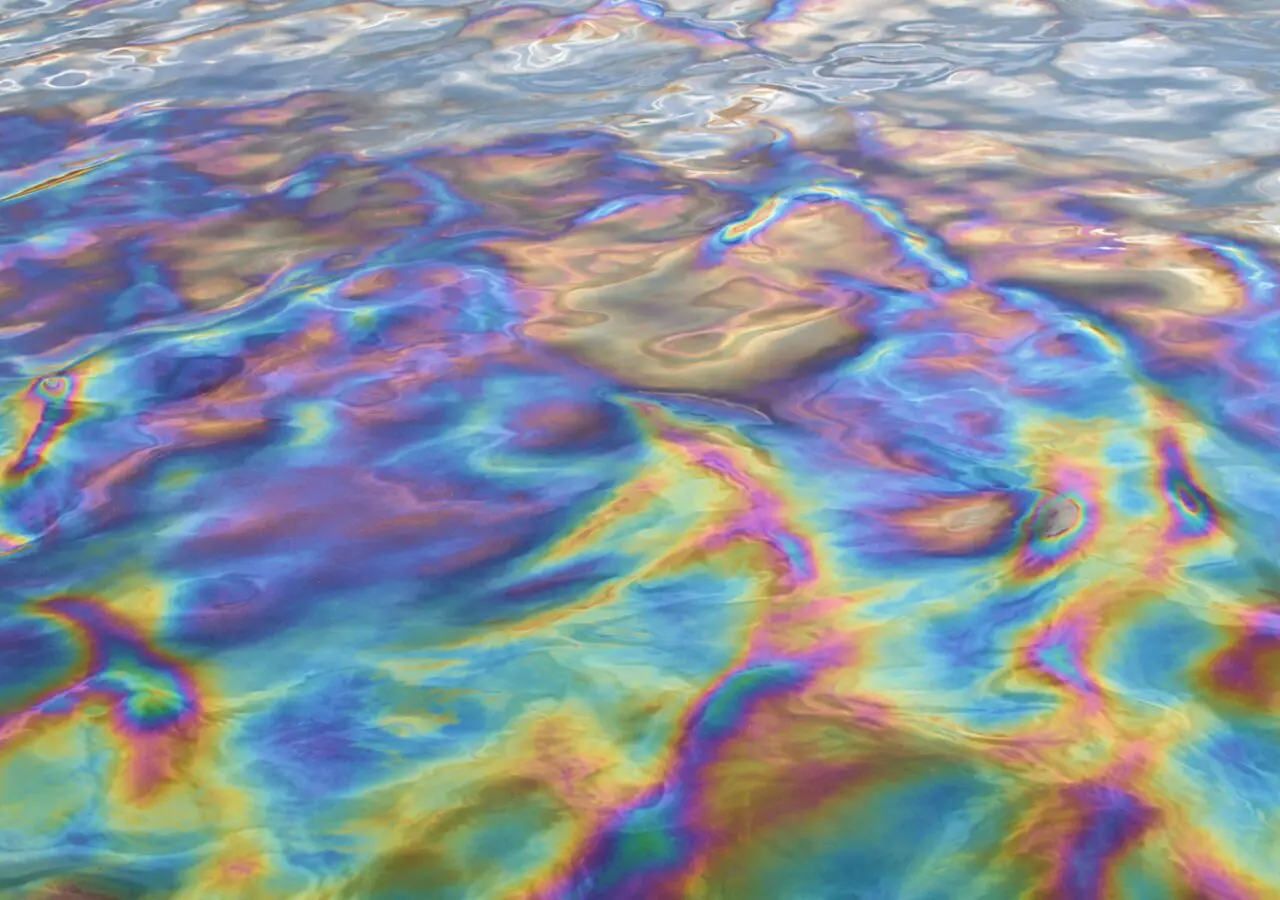
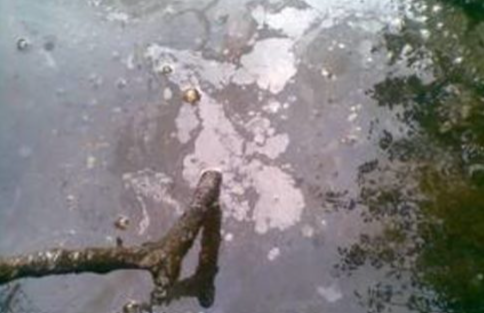
Fugitive tar and petroleum products both tend to weather into similar-looking dark, viscous residues that stain sediment and produce sheens on the water surface. The visual similarity helps explain why historical tar oil releases are so often mistaken for petroleum spills, and why petroleum contamination is sometimes mistaken for legacy gas plant waste. Physical appearance, odor, and basic bulk measurements like total petroleum hydrocarbon concentration can confirm that hydrocarbons are present, but they say very little about which industrial process generated them or when the release occurred. At a shoreline with more than one plausible historical source, that ambiguity becomes the central problem in any investigation.
Technical Approach
A publication in 2018 with my colleague Eric Litman (2) integrated forensic techniques for identifying tar oils and pyrogenic PAHs. By design, forensic investigators use some or all the techniques to accommodate site-specific objectives and circumstances. The approach entails four major steps:
Step 1 – Dominant Hydrocarbon Signatures generated from a solvent extract analyzed on a high-resolution gas chromatograph equipped with a flame ionization detector.
Step 2 – Aromatic Hydrocarbon Signatures generated from a solvent extract analyzed on a high-resolution gas chromatograph equipped with a mass spectrometer detector operated in selected ion monitoring mode.
Step 3 – Saturated Hydrocarbon Signatures generated from the aliphatic fraction of a solvent extract analyzed on a high-resolution gas chromatograph equipped with a mass spectrometer detector operated in selected ion monitoring mode.
Step 4 – Geochemical Biomarker Signatures generated from the aliphatic fraction of a solvent extract analyzed on a high-resolution gas chromatograph equipped with a mass spectrometer detector operated in selected ion monitoring mode.
This work includes a diverse collection of petrogenic and pyrogenic reference samples measured for traditional and emerging analytes to demonstrate the diverse signatures available for differentiating PAHs in industrialized environments. The expanded indicator inventory assures ample signature resolution for a wide range of forensic applications.
Pulling It All Together
Taken individually, these signatures may not settle a multi-source dispute. Combined, they let an investigator sort field samples into groups by source signature. Spatial patterns of these signatures help link or disconnect candidate sources to alleged areas of release. Where the data support it, the proportions of parent PAHs and saturated hydrocarbons can help estimate roughly how much tar or petroleum is present in each sample (source allocation). This stepwise approach provides scientific lines of evidence to confirm PAH origins with a high degree of confidence in oil, soil, sediment, water, air and tissue. It is my greatest hope that Dr. Neff would be pleased with our incremental progress.
- Neff, J.M. (1979) Polycyclic Aromatic Hydrocarbons in the Aquatic Environment: Sources, Fates, and Biological Effects. United Kingdom: Applied Science Publishers. ISBN: 9780853348320.
- Emsbo-Mattingly, S.D. and Litman, E. (2018) “Forensic identification of historical and ongoing tar oil releases in nearshore environments.” In: Oil Spill Environmental Forensics Case Studies, S.A. Stout and Z. Wang, Eds., Butterworth-Heinemann, Cambridge, MA. ISBN 978012804434-6.
Need Source Identification Expertise?
From source identification to litigation support, our team is here to help you move forward with confidence. Contact our specialists today.
Schedule a Consultation